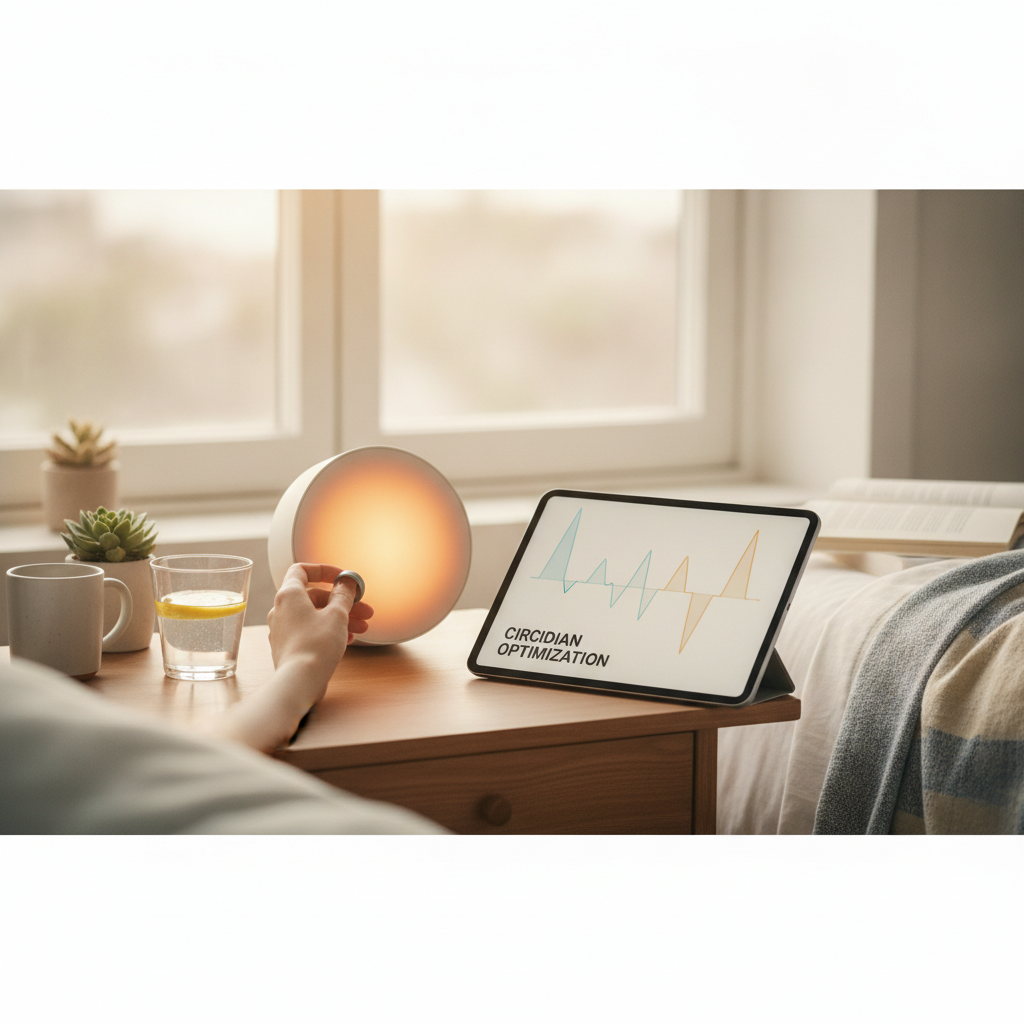
The Circadian Rhythm Foundation
Your circadian rhythm—24-hour biological cycle—regulates sleep-wake timing, hormone release, metabolism, body temperature, and countless physiological functions. Aligning lifestyle with this rhythm powerfully influences health.
Master Clock Regulation
Your hypothalamus contains the suprachiasmatic nucleus (SCN), the master clock. Light exposure, particularly bright morning light, synchronizes the SCN. Consistent sleep-wake timing strengthens circadian alignment.
Consequences of Circadian Disruption
Shift work, jet lag, and irregular sleep schedules disrupt circadian rhythm, causing:
- Sleep disorders
- Metabolic dysfunction and weight gain
- Increased inflammation
- Cognitive impairment
- Mood disturbances
- Elevated disease risk
Light Exposure Timing
Morning Light: Bright light exposure within 1-2 hours of waking strongly synchronizes circadian rhythm. Even 10-30 minutes outdoor morning light significantly impacts sleep quality.
Evening Darkness: Dim lights after sunset support melatonin production and sleep onset. Blue light from screens suppresses melatonin; use blue light filters or avoid screens 1-2 hours before bed.
Midday Sunlight: Additional bright light exposure around noon further strengthens circadian synchronization.
Meal Timing
Eating on a consistent schedule supports circadian rhythm. Time-restricted eating aligning with your active period (typically 10 AM-6 PM) supports metabolic health better than spread-out or late-night eating.
Exercise Timing
Morning or midday exercise supports circadian alignment better than evening exercise, which can delay sleep onset through stimulation and temperature elevation.
Practical Implementation
- Get bright light within 1-2 hours of waking
- Maintain consistent sleep-wake timing (including weekends)
- Limit evening light exposure
- Eat on consistent timing
- Exercise during daylight when possible
- Avoid screens 1-2 hours before bed
Adaptation Timeline
Circadian adjustment takes 3-7 days. After jet lag or schedule changes, prioritize consistent sleep timing and morning light for rapid readjustment.