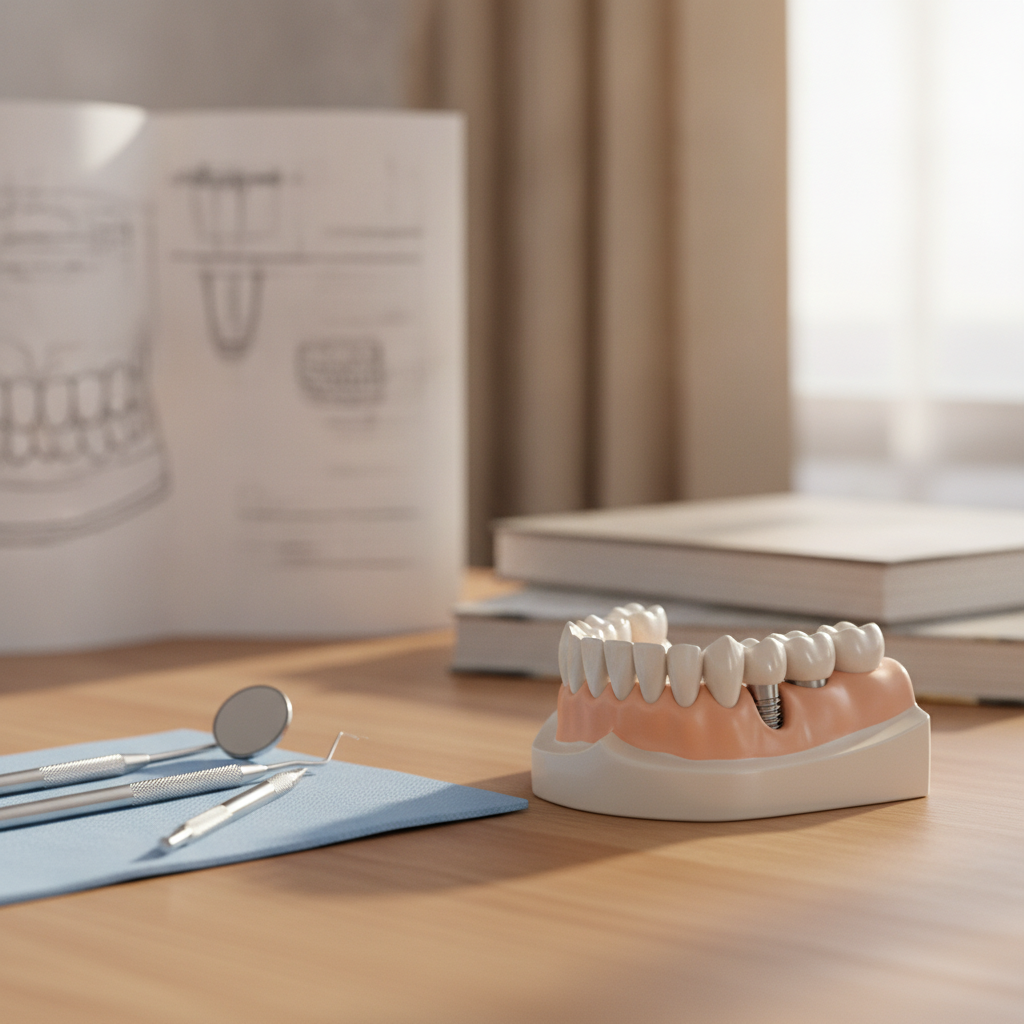
Dental implants represent a remarkable advance in tooth replacement. Understanding the technology helps patients make informed decisions about tooth loss treatment.
Implant Fundamentals
A dental implant is a titanium post surgically anchored in the jawbone. Over 3-6 months, bone grows around and integrates with the implant—a process called osseointegration. This creates a foundation as stable as a natural tooth root.
Once integrated, an abutment (connector piece) is attached, and a crown is secured to the abutment. The result functions like a natural tooth.
Success Rates
Modern implants have 95%+ success rates over 10 years. Failures are rare and usually occur within the first 6-12 months during integration. Long-term failures are uncommon if implants are properly maintained.
Longevity
Implants themselves can last a lifetime. However, the crown requires replacement every 10-15 years as the porcelain wears. The abutment and supporting bone may require attention, but the implant body typically remains indefinitely.
The Surgical Process
After extraction of a failed tooth, bone remodeling occurs (2-3 months). Implant placement requires precise surgical positioning. A healing period of 3-6 months allows osseointegration before the crown is placed.
In some cases, bone grafting is necessary if insufficient bone remains. This extends the timeline by several months but provides essential support.
Maintenance
Implants require excellent oral hygiene. Regular brushing, flossing, and professional cleanings prevent bacterial plaque accumulation around the implant. Smoking significantly increases implant failure risk.
Cost Considerations
Implants represent a higher initial investment than bridges or dentures. However, their longevity and minimal maintenance often make them more cost-effective over decades.
Candidacy
Sufficient bone volume is necessary. Uncontrolled diabetes and smoking increase complications. However, most people are candidates for implants or implant-compatible solutions.