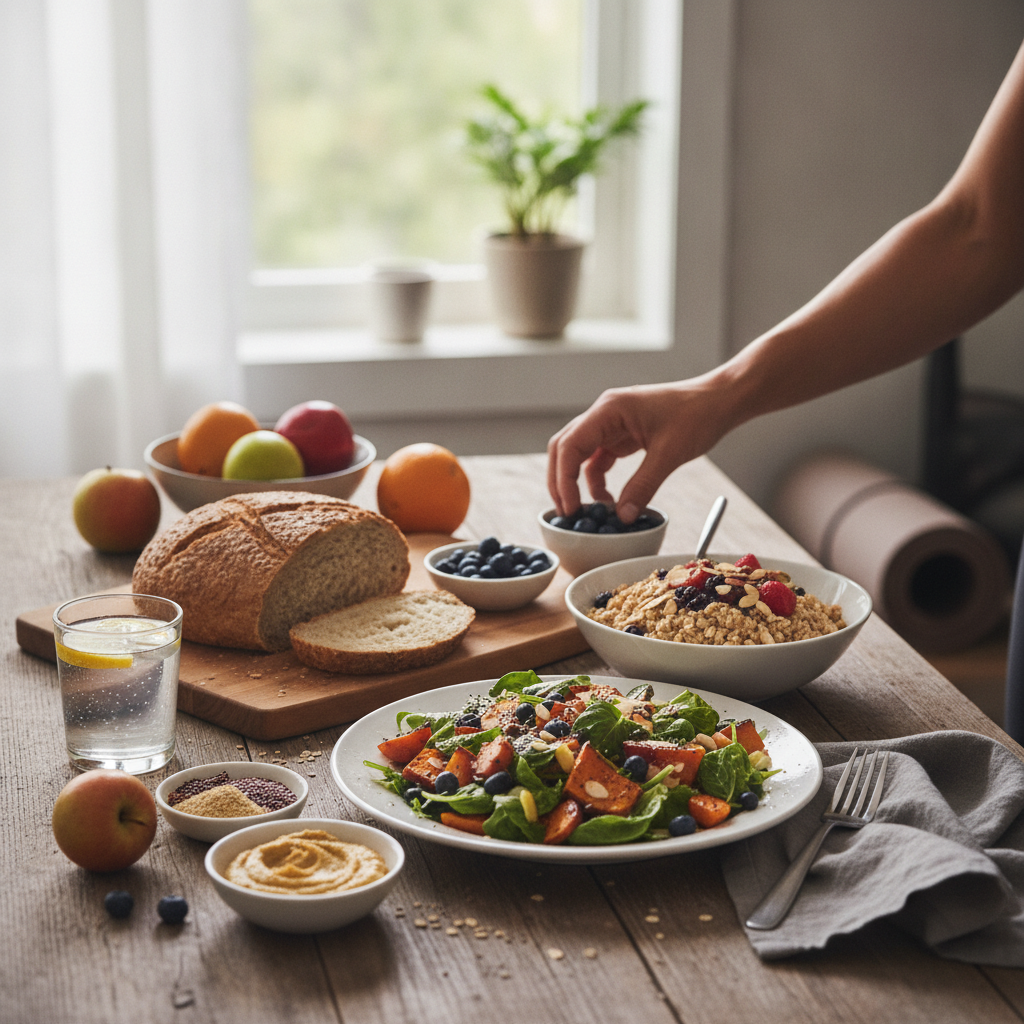
Dietary fiber receives insufficient attention despite being one of the most powerful tools for sustainable weight management. The mechanism is simple: fiber expands in your stomach, triggering fullness signals that persist for hours.
The Satiety Science
Soluble fiber (in oats, legumes, fruits) absorbs water and creates viscous gel in your digestive tract. This physically delays gastric emptying and prolongs satiety. Insoluble fiber (in vegetables, whole grains) adds bulk, creating mechanical fullness.
Research shows that 30+ grams daily fiber intake correlates with 2.5x higher weight loss success rates compared to low-fiber consumption.
Strategic Fiber Timing
Eating fiber-rich foods before calorie-dense items moderates overall calorie intake. For example, eating a salad before dinner naturally reduces the amount of pasta or other starches you consume. The fiber arrives first, establishing fullness that carries through the entire meal.
Optimal Fiber Sources
Vegetables: Broccoli (2.4g per cup), spinach (0.7g per cup), carrots (3.5g per cup). Legumes: Black beans (15g per cup), lentils (16g per cup), chickpeas (13g per cup). Fruits: Raspberries (8g per cup), pears (6g per fruit), apples (4.5g per fruit). Grains: Oats (8g per cup), brown rice (4g per cup), whole wheat bread (3.5g per slice).
The Practical Protocol
Breakfast: Oatmeal with berries (12g fiber). Snack: Apple with almond butter (6g fiber). Lunch: Salad with chickpeas (15g fiber). Dinner: Vegetables with brown rice and beans (10g fiber). Total: 43 grams.
Transition Strategy
Increasing fiber abruptly causes bloating and gas. Increase by 5 grams weekly, spreading intake throughout the day. Drink substantially more water—fiber requires hydration to be effective. Within 3-4 weeks, your digestive system adapts completely.
The Weight Loss Timeline
Week 1: Improved satiety and reduced appetite. Week 2: Normalized digestion. Week 3+: Reduced overall calorie intake and stable weight loss pattern.
Metabolic Bonus
Fiber-rich foods typically contain lower calorie density—more food, fewer calories. A bowl of vegetables with chickpeas provides satiety equivalent to a calorie-denser meal with half the calories.