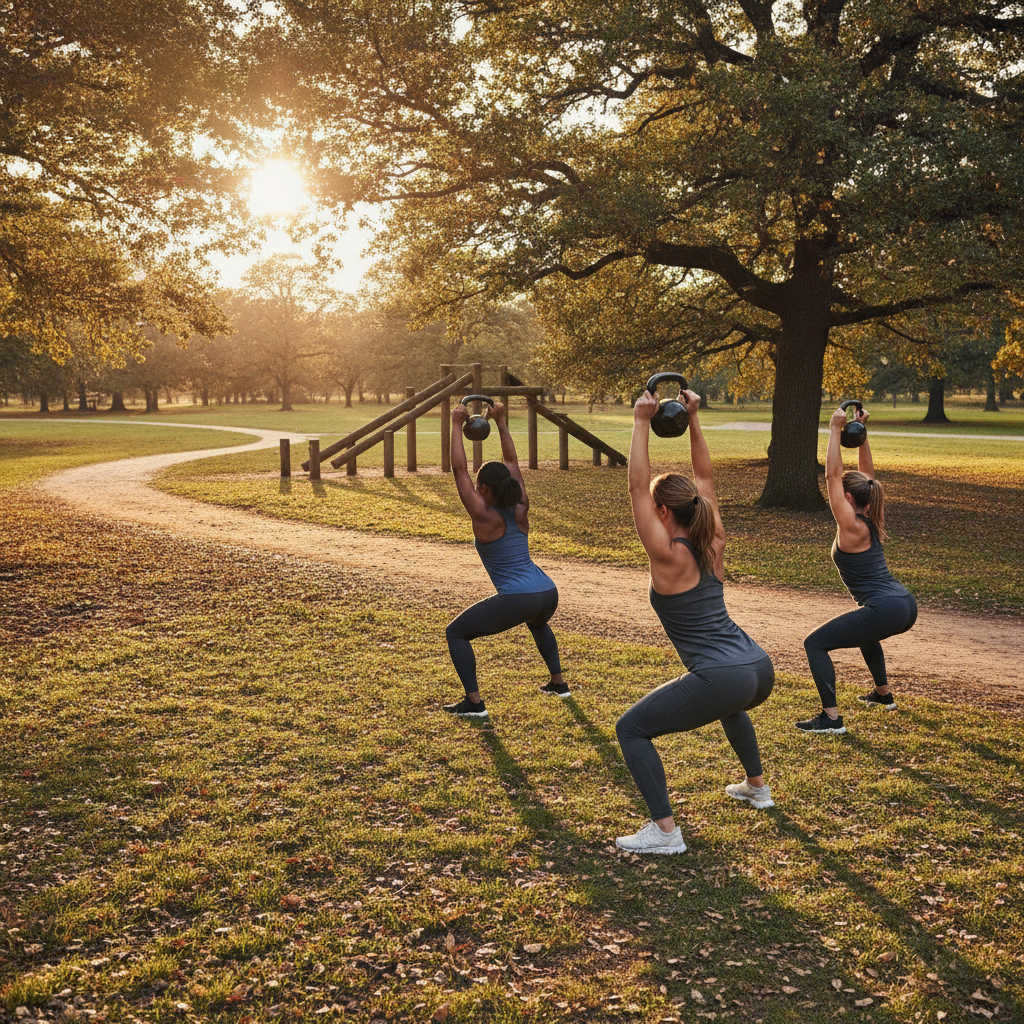
Beyond Isolated Muscle Groups
Functional fitness emphasizes movement patterns over individual muscles. Your body works as an integrated system, so training should reflect that reality.
The Seven Primary Movement Patterns
- **Squatting**: Sitting into a chair or lifting something from the ground
- **Hinging**: Bending at hips while maintaining neutral spine
- **Pushing**: Pressing something away from your body horizontally or vertically
- **Pulling**: Drawing something toward you
- **Carrying**: Supporting load while walking
- **Rotation**: Controlling rotational forces
- **Anti-Rotation**: Resisting unwanted rotation
Building a Functional Program
Each workout should include at least one exercise from most movement patterns. Squats and deadlifts cover multiple patterns. Add horizontal and vertical pressing and pulling. Include loaded carries and core anti-rotation work.
Real-World Benefits
People who train functionally report easier yard work, improved posture while working at desks, reduced injury during recreational activities, and maintained independence throughout life.
Programming Strategy
Start with three full-body sessions weekly, each including one squat, one hinge, one push, one pull, and one carry or core exercise. Progress resistance gradually while maintaining movement quality. This approach builds comprehensive strength applicable beyond the gym.
Measuring Functional Improvements
Track practical metrics like how heavy you can comfortably carry, how many stairs you climb without fatigue, or your ability to get up from the floor without using hands. These real-world measures matter more than isolated strength numbers.