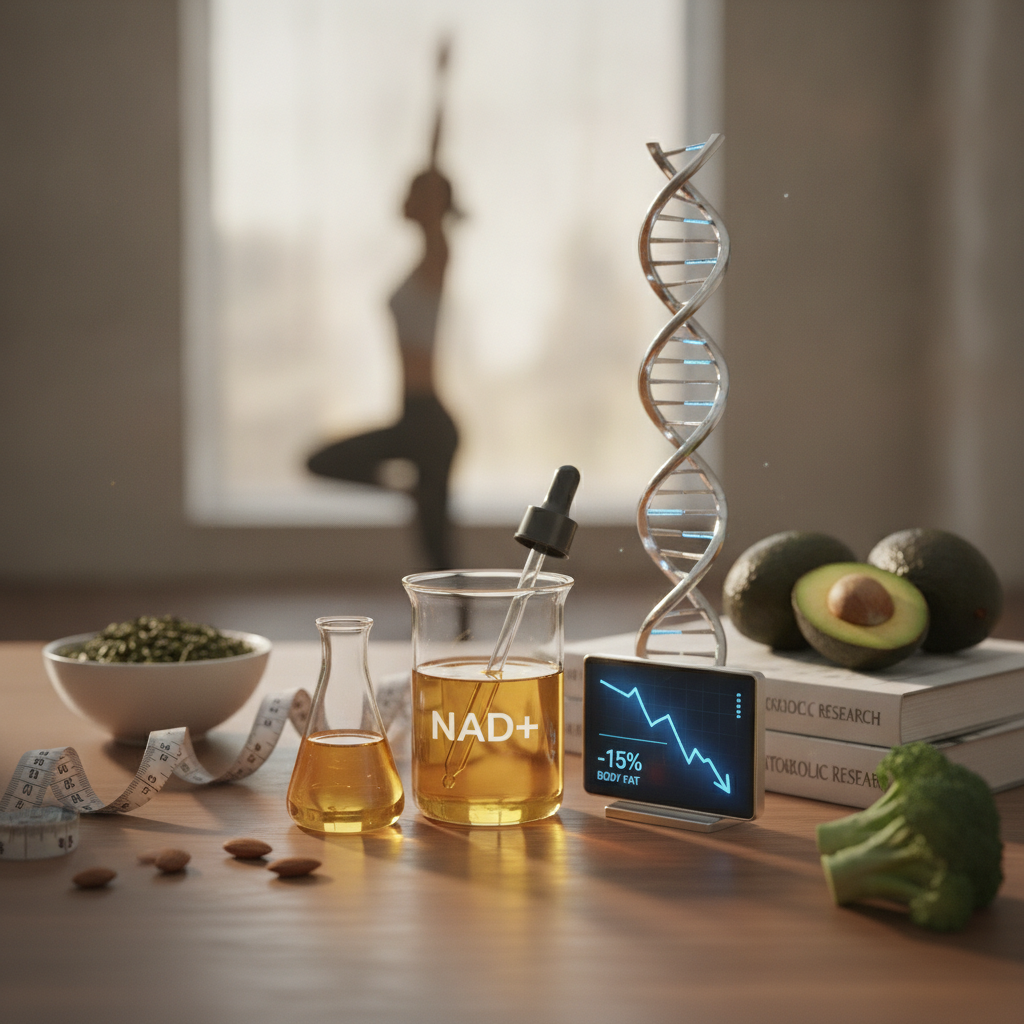
Nicotinamide adenine dinucleotide (NAD+) is a coenzyme present in every living cell, essential for converting food into cellular energy. As we age, NAD+ levels decline by approximately 50% every 20 years, directly impacting metabolic efficiency.
The NAD-Metabolism Connection
NAD+ is required for mitochondrial function, the process of converting calories into usable energy (ATP). Low NAD+ means mitochondria produce energy less efficiently, and excess calories are more likely stored as fat rather than burned.
NAD+ also activates sirtuins, a family of proteins that regulate metabolism, inflammation, and fat storage. SIRT1 activation promotes fat oxidation and improves insulin sensitivity.
Why NAD Declines With Age
Chronic inflammation consumes NAD+ through CD38 enzyme activation. DNA damage repair requires NAD+ as a substrate. Overeating and sedentary behavior accelerate NAD+ depletion. This creates a vicious cycle: less NAD means less efficient metabolism means more fat storage.
Natural Ways to Boost NAD
Exercise is the most potent NAD+ booster, increasing levels by upregulating NAMPT (the enzyme that recycles NAD). Fasting and caloric restriction activate NAD+ synthesis pathways. Heat stress (sauna) and cold exposure both stimulate NAD+ production.
Precursor Supplementation
NMN (nicotinamide mononucleotide) and NR (nicotinamide riboside) are NAD+ precursors available as supplements. Human trials show they successfully raise blood NAD+ levels. Whether this translates to meaningful weight loss is still under investigation.
Practical Application
Focus on natural NAD-boosting behaviors first: regular exercise, time-restricted eating, adequate sleep, and stress reduction. These provide the largest effect sizes with the strongest evidence base. Consider precursor supplementation as an adjunct after lifestyle foundations are solid.