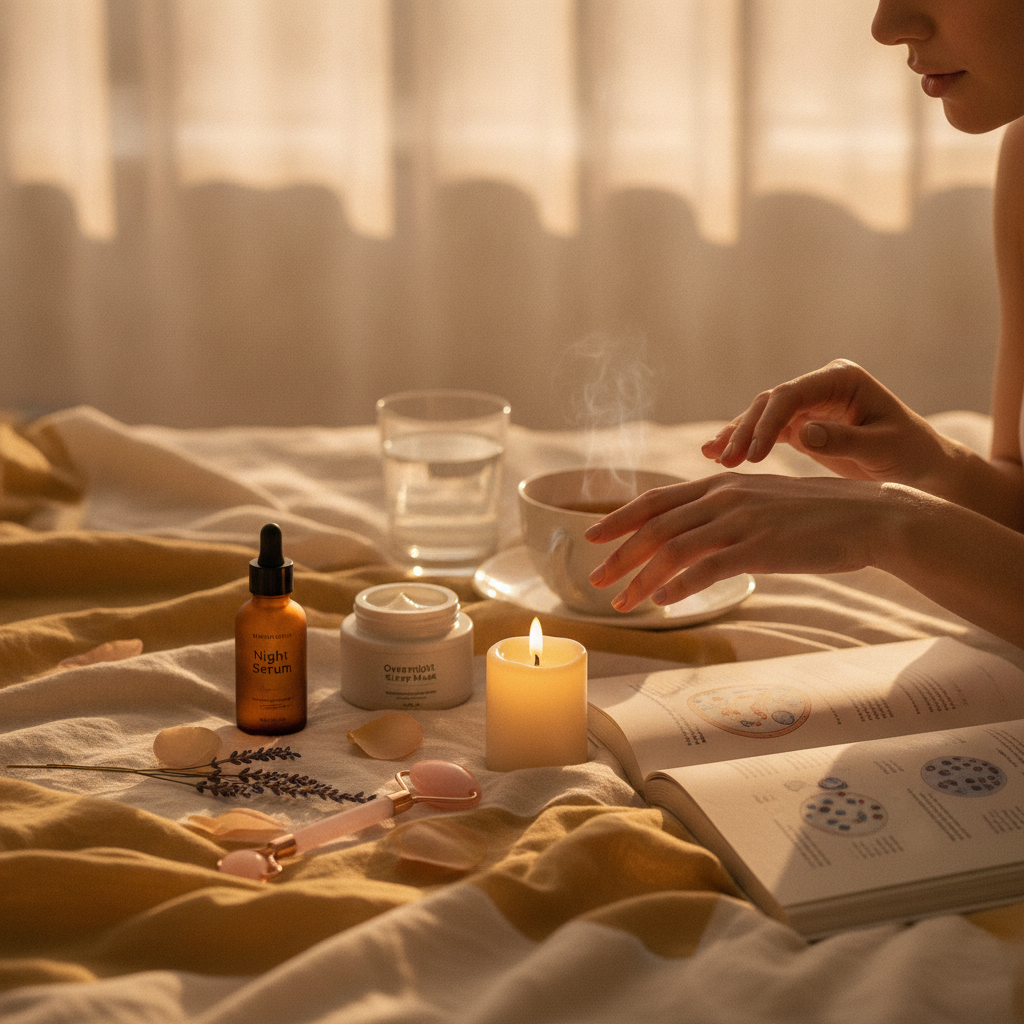
Sleep's Critical Role in Skin Health
During sleep, the body initiates comprehensive repair and renewal processes. Growth hormone peaks, blood flow to skin increases, and stress hormone cortisol decreases. These changes create optimal conditions for cellular repair and collagen synthesis.
Sleep Duration and Skin Quality
Research demonstrates that people sleeping fewer than 6 hours nightly show increased inflammatory markers and reduced skin barrier function. Conversely, 7-9 hours of quality sleep significantly improves skin appearance and reduces blemishes.
Optimizing Nighttime Repair
Sleep Duration: Prioritize 7-9 hours of consistent sleep. Even partial sleep deprivation impairs skin healing mechanisms.
Sleep Quality: Create an environment conducive to deep sleep:
- Dark, cool bedroom (around 65-68°F optimal)
- Minimal light exposure (including screens)
- White noise if needed
- Consistent sleep schedule
Pre-Sleep Nutrition: Light meals 2-3 hours before sleep containing complex carbohydrates and protein support sleep quality without digestive interference.
Supportive Nutrients for Sleep
Magnesium: Supports deep sleep and relaxation. Include leafy greens, seeds, and nuts in evening meals.
Tryptophan: Precursor to serotonin and melatonin. Turkey, eggs, and cheese contain tryptophan.
Glycine: An amino acid supporting sleep quality. Bone broth and gelatin are rich sources.
Post-Sleep Skincare
Upon waking, cleanse gently to remove accumulated oils and sweat. Follow with appropriate moisturizers to seal in hydration achieved during sleep.
Prioritizing sleep quality may be the single most impactful intervention for skin health, more significant than many expensive skincare products.